
THIS ARTICLE COVERS:
Canapés
Finger Food
Allergens & Dietaries
Seasonal Menus
Event Catering
Our Menus
Plated Dining
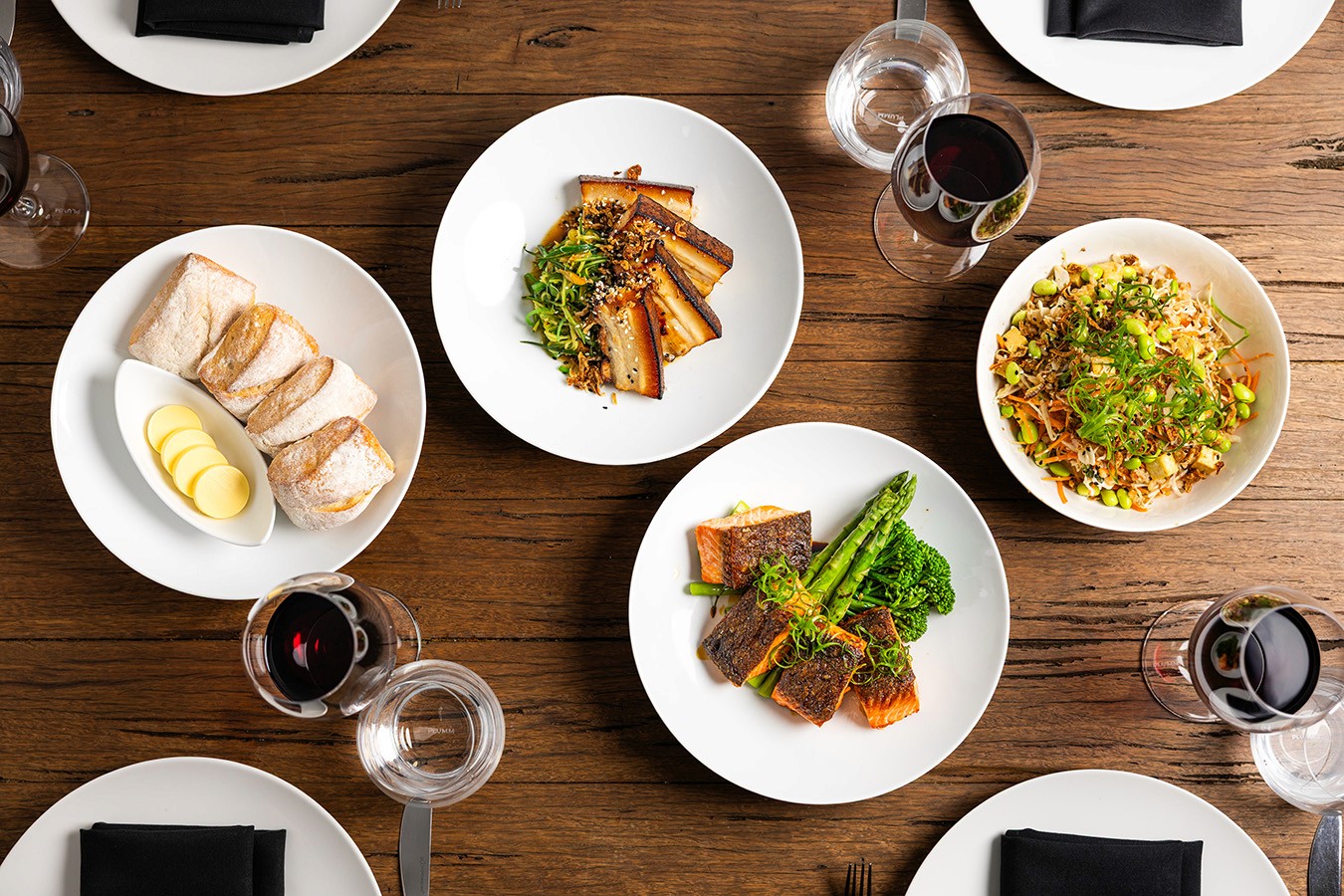
Shared Dining
Locally sourced ingredients, globally inspired techniques and a few flavours you might not have come across before are all part of the experience.
We know that a menu can sometimes read like a foreign language, so we've put together this handy glossary to decode the terms, techniques and ingredients across all three of our 2026 menus. Consider this your cheat sheet before the big event.

Roast Free-Range Chicken Ballotine

Roasted Cauliflower & Truffle Beignet

Hiramasa Kingfish

Smashed Hamachi Crudo
A-Z Glossary
Aleppo Pepper
A mildly spiced, fruity chilli from the Aleppo region of Syria. Less sharp than most dried chillies, it has a gentle heat with an almost sun-dried tomato quality — warm, slightly oily and subtly sweet.
USED IN: Slow-cooked lamb shoulder (Shared Dining - FEAST 1)
Ballotine
A French culinary term for a piece of poultry (or other protein) that has been boned, stuffed, rolled and tied. It holds its shape beautifully when sliced, presenting clean, even rounds on the plate. The result is tender, evenly cooked meat with filling in every bite.
USED IN: Roast free-range chicken ballotine (Plated Dining)
Beignet
A French-style fritter — light, airy and deep-fried. The texture sits somewhere between a choux pastry puff and a doughnut, with a golden, crispy exterior and a soft, delicate centre.
USED IN: Roasted cauliflower & truffle beignet (Plated Dining)
Black Lava Salt
Flaky sea salt blended with activated charcoal. It has the same clean salinity as regular sea salt, but with a striking black appearance that adds visual drama to a dish.
USED IN: Tuna Tartare (Canapé Menu)
Bonito Crème
A rich, savoury cream made using bonito - a tuna-like fish found in Australian waters. Bonito is often used in its dried, flaked form (known as katsuobushi in Japanese cuisine) to add a deep, smoky, umami flavour.
USED IN: Hiramasa Kingfish (Canapé Menu)
Bordelaise Sauce
A savoury French red wine Jus finished with poached bone marrow for a velvety texture and deep umami richness.
USED IN: Grain-fed Angus beef filled (Plated Dining)
Burrata
A fresh Italian cheese made from mozzarella and cream. The outer shell is solid mozzarella, while the inside is a soft, creamy curd. It has a rich, milky flavour with a buttery finish. Used in: Burrata cheese bowl
USED IN: Burrata Cheese (Substantial Canapés)
Celeriac Fondant
Celeriac is a root vegetable closely related to celery - earthy, slightly nutty and mild in flavour. A fondant is a cooking technique where the vegetable is slowly cooked in butter until tender and caramelised on the outside, resulting in a deeply flavoured, melt-in-the-mouth texture.
USED IN: Miso-glazed celeriac fondant (Plated Dining)
Chervil
A delicate French herb with feathery leaves, similar in appearance to flat-leaf parsley but with a subtle aniseed flavour. Often used as a garnish in fine dining.
USED IN: Roasted cauliflower & truffle beignet (Plated Dining)
Confit
A preservation and cooking technique where an ingredient is slowly cooked submerged in fat (typically duck fat, oil or butter) at a low temperature. The result is extraordinarily tender, flavoursome and rich - confit duck in particular is considered a French classic.
USED IN: Confit duck & confit chicken & herb terrine (Plated Dining)
Creole Remoulade
A tangy, punchy sauce rooted in Creole (Louisiana) cuisine. Similar to a tartar sauce but bolder - typically made with mayonnaise, mustard, horseradish, hot sauce and herbs. It has a bright, peppery kick.
USED IN: Southern-style crispy fish sandwich (Substantial Canapés)
Crudo
The Italian word for 'raw'. In cooking, it refers to a dish of thinly sliced or smashed raw fish or seafood, dressed simply with acid (citrus or vinegar), good oil and seasoning. Think of it as the Italian counterpart to Japanese sashimi - clean, fresh and ingredient-forward.
USED IN: Smashed Hamachi Crudo (Plated Dining)
Cultured Butter
Butter made from cream that has been fermented with live bacterial cultures before churning. This gives it a more complex, tangy, slightly nutty flavour compared to regular butter — closer to European-style butter
USED WITH: Levain Dinner Roll with Cultured Butter (Plated & Shared Dining)
Dulce de Leche
A thick, rich caramel sauce made by slowly heating sweetened milk. The result is deeply sweet, smooth and caramel-like in flavour - a staple in Latin American dessert-making.
USED IN: Flourless chocolate cake (Plated Dining)
Edamame
Young, green soybeans, typically served in their pods. Mild and slightly sweet with a firm, satisfying bite. A common ingredient in Japanese and Asian-inspired dishes.
USED IN: Brown rice salad (Shared Dining - FEAST 3)
Eschalot (Shallot)
A small, elongated member of the onion family. Eschalots have a milder, more refined flavour than regular onions - slightly sweet and garlicky. They're often used raw, pickled, or finely minced in dressings and sauces.
USED IN: Peking duck pancake (Canapés) & Cherry vine tomato & confit artichoke salad (Shared Dining - FEAST 2)
Fregola
A Sardinian pasta made from semolina dough rolled into small balls and toasted. It has a slightly nutty flavour and a chewy texture, similar to couscous but more substantial. It absorbs sauces and flavours beautifully.
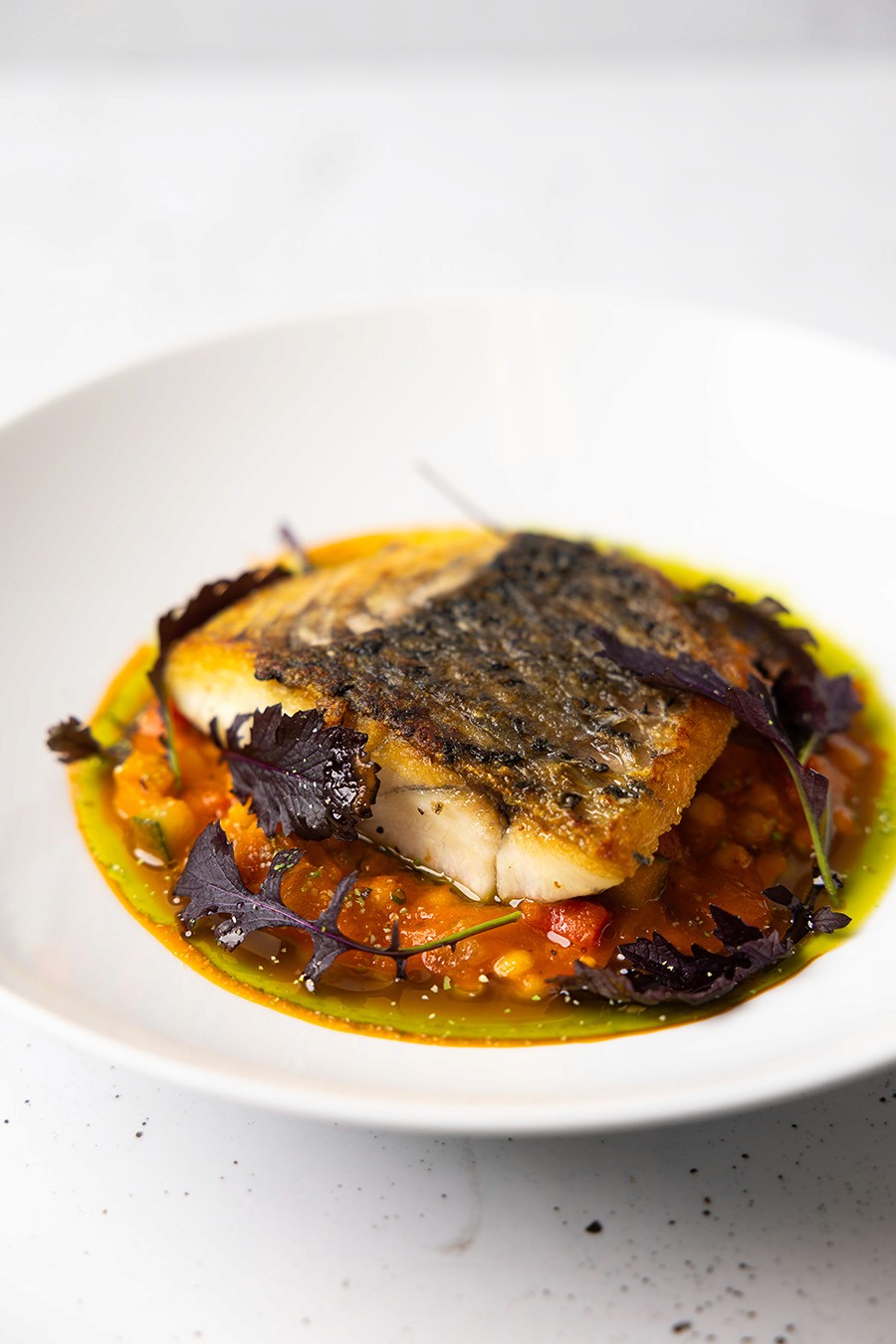
USED IN: Pan-seared barramundi (Plated Dining)
Gochujang
A fermented Korean chilli paste made from red chilli, glutinous rice, fermented soybeans and salt. It's deep, spicy and complex - with a slow-building heat and rich umami undertone that makes it a versatile ingredient in marinades, sauces and glazes.
USED IN: Wagyu beef tataki (Plated Dining)
Gyoza
Japanese pan-fried dumplings, typically filled with pork or chicken and vegetables. They're seared on one side to create a golden, crispy base, then steamed to finish - resulting in a satisfying contrast of textures.
USED IN: Five spice chicken gyoza (Canapés)
Hamachi
The Japanese name for yellowtail kingfish - a prized sushi and sashimi fish known for its clean, buttery flavour and silky texture. Similar to Hiramasa kingfish, it's often served raw or very lightly dressed.
USED IN: Smashed hamachi crudo (Plated Dining)
Hiramasa Kingfish
An Australian-farmed yellowtail kingfish (also known as amberjack). It has a clean, mild, slightly sweet flavour with a firm yet silky texture - exceptional when served raw or lightly cured.
USED IN: Hiramasa Kingfish (Canapés)
Kalamata Olives
A variety of Greek olive, dark purple-black in colour, with a rich, meaty flavour and a slight bitterness. Named after the city of Kalamata in southern Greece, they're a staple of Mediterranean cooking.
USED IN: Slow-cooked lamb shoulder (Shared Dining - FEAST 1)
Karaage
A Japanese method of deep-frying marinated chicken (or other proteins) in a light, crispy coating. The chicken is marinated in soy, ginger and garlic before frying, giving it a deeply savoury, tender result with a satisfyingly crunchy exterior.
USED IN: Chicken karaage bowl (Canapés)
Pan-Seared Barramundi

Five Spice Chicken Gyoza

Slow-Cooked Lamb Shoulder

Karaage Chicken Substantial Canape

Cherry Tomato & Confit Artichoke Salad

Flourless Chocolate Cake

Truffle Goats Curd Mille-Feuille

Seared Scallops, Prawn Mousseline
Kimchi
A traditional Korean fermented condiment, most commonly made from cabbage and radish, seasoned with chilli, garlic and ginger. It's tangy, spicy and pungent — a punchy counterpart to rich proteins.
USED IN: Korean fried chicken burger (Substantial Canapés) & Sous-vide pork belly (Shared Dining - FEAST 3)
Kombu Dust
Ground dried kombu — a type of kelp (seaweed) widely used in Japanese cooking as a base for stocks and seasoning. It carries an intense, savoury umami flavour without any strong 'fishy' quality.
USED IN: Smoked chicken waffle cone (Canapés)
Levain
A naturally leavened (sourdough) bread, made using a fermented starter culture rather than commercial yeast. The result is a bread with a complex, slightly tangy flavour and a chewier crumb than standard dinner rolls.
USED IN: Levain dinner roll with cultured butter (Plated & Shared Dining)
Lilliput Capers
The smallest variety of caper - tightly budded and intensely flavoured. They have a sharp, briny, pickled quality that cuts through rich or oily ingredients. The smaller the caper, the more pronounced the flavour.
USED WITH: Cherry vine tomatoes & confit artichoke salad (Shared Dining - FEAST 2)
Mascarpone
A rich, Italian cream cheese with a very high fat content and a smooth, velvety texture. It has a mild, slightly sweet flavour and is often used in desserts (most famously tiramisu) as well as savoury sauces.
USED IN: Flourless chocolate cake (Plated Dining)
Mille-Feuille
Literally translating to 'a thousand leaves' in French, mille-feuille is a pastry made from many thin, flaky layers of puff pastry. It's light, delicate and shatters on the first bite.
USED IN: Truffle goats curd mille-feuille (Canapés) & Vanilla custard mille-feuille (Plated Dining)
Miso
A traditional Japanese paste made from fermented soybeans, salt and a mould culture (koji). It ranges from light and sweet (white miso) to deep and savoury (red miso). Used as a seasoning, marinade or sauce base, it delivers a rounded, salty, umami depth.
USED IN: Yuzu lemon tart (Canapes), Slow-cooked beef short rib (Substantial Canapés), Miso-glazed celeriac fondant (Plated Dining) & Heirloom Carrots (Shared Sides)
Mojo Pork
Pork marinated in a bright, garlicky Cuban-style citrus marinade - traditionally made with sour orange juice, garlic, oregano and cumin. The result is deeply flavoured, fragrant and tender.
USED IN: Cuban sandwich (Substantial Canapés)
Mousseline
A light, delicate mixture made by blending a protein (such as prawn or chicken) with cream and eggs. The result is velvety and refined - often used as a filling or garnish in plated fine dining.
USED IN: Seared scallops, prawn mousseline (Plated Dining)
Muscatels
Dried muscat grapes - small, intensely flavoured and sweet, often with a slightly floral or honeyed quality. A classic accompaniment to a cheese board, providing sweetness to balance aged and savoury cheeses.
USED IN: International & local cheese board (Plated & Shared Dining)
Nduja
A spreadable, spiced pork salumi originating from Calabria in southern Italy. It's intensely flavoured — fiery, rich and fatty, with the kind of heat that builds slowly. When warmed, it melts into sauces and spreads beautifully.
USED IN: Nduja & romesco crisp (Canapés)
Orzo
A small, rice-shaped pasta, popular in both Italian and Greek cooking. Despite its appearance, it's made from semolina wheat. It has a tender, slightly chewy texture and absorbs flavours from sauces and broths well.
USED WITH: Tuscan chicken bowl (Substantial Canapés)
Panna Cotta
An Italian dessert made by setting sweetened cream with gelatine. The result is a smooth, silky, just-barely-set pudding with a pure, clean dairy flavour — a canvas for accompanying flavours like citrus or caramel.
USED IN: Brown sugar panna cotta (Plated Dining)
Pomme Purée
The French term for mashed potato — but elevated. Classic pomme purée uses a high ratio of butter to potato, resulting in an extraordinarily smooth, rich and silky consistency.
USED IN: Pressed grain-fed Angus beef short rib (Plated Dining)
Ponzu
A Japanese citrus-based sauce or dressing, combining citrus juice (traditionally yuzu) with soy sauce, mirin and dashi. It's bright, tangy and savoury — a lighter alternative to straight soy.
USED IN: Beef tataki tartlet (Canapés) & Smashed Hamachi Crudo (Plated Dining)
Praline
Caramelised sugar blended with nuts (usually almonds or hazelnuts). It can be set into a brittle shard or ground into a crumb for texture and sweetness in desserts.
USED IN: Salted caramel tart (Plated Dining)
Puff Sorghum
Sorghum is an ancient grain native to Africa and widely grown in Australia. When puffed (like puffed rice), it becomes light and airy with a mild, toasty flavour — an elegant gluten-friendly alternative to traditional puffed grains.
USED IN: Smashed hamachi crudo (Plated Dining)
Romesco
A rich, nutty sauce originating from Catalonia in Spain. Traditionally made from roasted red peppers, tomatoes, almonds and garlic, it has a deep, smoky sweetness with a complex, savoury finish.
USED IN: Nduja & romesco crisp (Canapés) & Pan-seared barramundi (Plated Dining)
Rosti
A Swiss dish of grated potato, pan-fried until crispy on the outside and tender within - essentially a potato cake. It's golden, comforting and pairs well with both rich meats and lighter proteins.
USED IN: Confit duck (Plated Dining) & Chicken & herb roulade (Shared Dining - FEAST 1)
Roulade
A dish made by spreading a filling onto a flat piece of protein, then rolling it tightly and cooking it. When sliced, it reveals a spiral of filling - visually striking and evenly flavoured in every bite.
USED IN: Chicken & herb roulade (Plated Dining)
Salsa Verde
An Italian green sauce made with fresh herbs (typically parsley, basil and mint), capers, garlic, anchovy and olive oil. Bright, pungent and punchy - it cuts through richness and lifts heavier dishes.
USED IN: Roasted cauliflower & truffle beignet (Plated Dining) & Grilled Coral Coast barramundi (Shared Dining - FEAST 2)
Sauce Vierge
A classic French uncooked sauce made with olive oil, lemon juice, tomatoes and fresh herbs. Light and fresh, it's typically served with fish - adding acidity and brightness without overpowering delicate flavours.
USED IN: Ocean trout (Plated Dining)

Pressed Grain-Fed Angus Beef Short Rib

Salted Caramel Tart

Chicken & Herb Roulade

Ocean Trout

Slow-Cooked Pressed Lamb Shoulder

Beef Tataki Tartlet

Prawn Toast

Confit Chicken & Herb Terrine
Sauce Verte
French for 'green sauce', this herb-based sauce typically includes parsley, tarragon, capers and anchovies. Similar to salsa verde but with a French accent - clean, herbaceous and bright.
USED WITH: Slow-cooked pressed lamb shoulder (Plated Dining)
Soy Ponzu Veil
A refined technique where ponzu (citrus soy sauce) is set into an extremely thin, translucent gel 'veil' using a setting agent. It creates an elegant, almost see-through layer of flavour that sits delicately on top of the dish.
USED IN: Beef tataki tartlet (Canapés)
Sous-Vide
A French cooking technique meaning 'under vacuum'. Food is sealed in a bag and cooked in a precisely temperature-controlled water bath for an extended period. The result is perfectly, evenly cooked protein - pork belly cooked sous-vide, for example, becomes extraordinarily tender while retaining its moisture.
USED IN: Sous-vide pork belly (Shared Dining - FEAST 3)
Tapioca Crisp
Tapioca pearls (a starch derived from the cassava root) are cooked, then dried and fried to create a light, airy, glassy crisp. They add texture and a subtle neutral flavour to the dishes they garnish.
USED IN: Hiramasa kingfish (Canapés)
Tarragon Oil
An infused oil made by blending fresh tarragon - an aromatic herb with a distinctive, aniseed-like flavour- with a neutral oil. Used to finish dishes with a fragrant, herbaceous note.
USED IN: Seared scallops (Plated Dining)
Tataki
A Japanese cooking method where fish or meat is very briefly seared on the outside, leaving the inside raw or rare. It combines the texture and flavour of lightly cooked and raw protein in each bite.
USED IN: Beef tataki tartlet (Canapés) & Wagyu beef tataki (Plated Dining)
Terrine
A classic French preparation where finely ground or layered ingredients are packed into a mould and cooked, then sliced to serve. Terrines are typically served cold or at room temperature and can be made from meat, poultry or vegetables.
USED IN: Confit chicken & herb terrine (Plated Dining)
Togarashi
A Japanese spice blend, typically combining dried chilli with sesame seeds, orange peel, nori (seaweed) and other aromatics. It has a warm, layered heat with citrus and savoury notes - used as a seasoning or table condiment.
USED IN: Chicken karaage bowl (Substantial Canapés)
Triple Cream Brie
A rich, indulgent style of soft-ripened cheese where extra cream is added during production, resulting in a fat content above 75%. The texture is exceptionally soft and luxurious, and the flavour is mild, buttery and slightly earthy.
USED IN: Truffle chicken & leek pie (Canapés)
Whipped Ricotta
Ricotta is a light, milky fresh Italian cheese. When whipped, it becomes smooth, airy and cloud-like in texture - a versatile base that pairs beautifully with both sweet and savoury accompaniments.
USED IN: Roast pumpkin salad (Shared Dining - FEAST 1)
Yuzu
A Japanese citrus fruit, similar in size to a mandarin but with a distinctly floral, tart flavour - somewhere between grapefruit, lemon and mandarin. Its zest and juice are used to add brightness and fragrance to both sweet and savoury dishes.
USED IN: Prawn Toast & Yuzu lemon tart (Canapés) & Chicken karaage bowl (Substantial Canapés)


