THIS ARTICLE COVERS:
Brisbane Corporate Catering
Brisbane Corporate Events
Catering Costs
Corporate Catering
Conferences
Drop-Off Catering Brisbane
Event Catering
Event Planning
Express Catering
Office Catering
Office Lunch Catering
On-Site Catering
The good news: getting the quantity right isn't guesswork. It comes down to a few simple factors — headcount, event type, time of day, and who's actually in the room. We've put together a general guide to ordering corporate catering before, covering budget and group size at a high level. This piece goes a layer deeper and gives you an actual formula to work from, so you can plan your next order with confidence rather than rounding up "just to be safe."

The number of people invited to an event and the number who actually confirm attendance are rarely the same and it's the confirmed number you should be catering to. If you've sent an invite to 40 people but only 35 have RSVP'd by the cut-off date, base your order on those 35 confirmed guests (plus the buffer covered further down), rather than guessing if the remaining 5 might turn up.
For events without a formal RSVP process, such as training days and workshops, it's worth asking the relevant team lead or HR contact for the best available headcount, rather than assuming a chunk of people won't show. Our general guidance, echoed by our Event Specialists, is to lean toward slightly over-catering rather than under. Running short on food reflects poorly on the event itself, not just the catering, and for something like a training day, guests need to stay well fed to stay engaged through the afternoon.
Quick Tip:
If you're sending invites through an email marketing platform like Mailchimp, Klaviyo or HubSpot, set your RSVP due date a couple of days earlier than you actually need it. When that date arrives, schedule a follow-up to everyone who hasn't responded along the lines of "thanks for RSVPing 'no' to this event." You'll be surprised how many people reply in a panic, realising they left it too late and asking if they can still come - and because you've kept a couple of spare days up your sleeve, you can accommodate them without putting yourself or your caterer under unnecessary pressure.
A Note From Us:
To make sure every guest is properly catered for, we, like most caterers, need final numbers and menu selections locked in at least 10 business days out from your event (7 business days for drop-off catering). Worth factoring in when you're setting your own RSVP deadline.

These are the benchmarks we use as a starting point, then adjust based on your team, the time of day, and how long the event runs.
Event Type | Food Per Person | Notes |
|---|---|---|
Working lunch (1–2 hrs) | 1 main-size portion + 1–2 sides | Add a light dessert or fruit if it's running past 1pm |
Morning/afternoon tea | 2–3 small items | Pastries, fruit, one savoury option |
Half-day training/workshop | Morning tea + lunch | Budget for a mid-afternoon energy dip — more on that below |
Full-day conference | Morning tea + lunch + afternoon tea | See our conference catering page for multi-session and multi-day planning |
Networking/cocktail event | 6–8 canapé-style pieces per person | Higher for events over 2 hours, lower if there's a sit-down component |
If you're not sure which format actually suits your event - shared platters, individually boxed meals, or a sit-down style? Our full menu range breaks down the options by service style, from breakfast and conference catering through to canapés and shared dining.


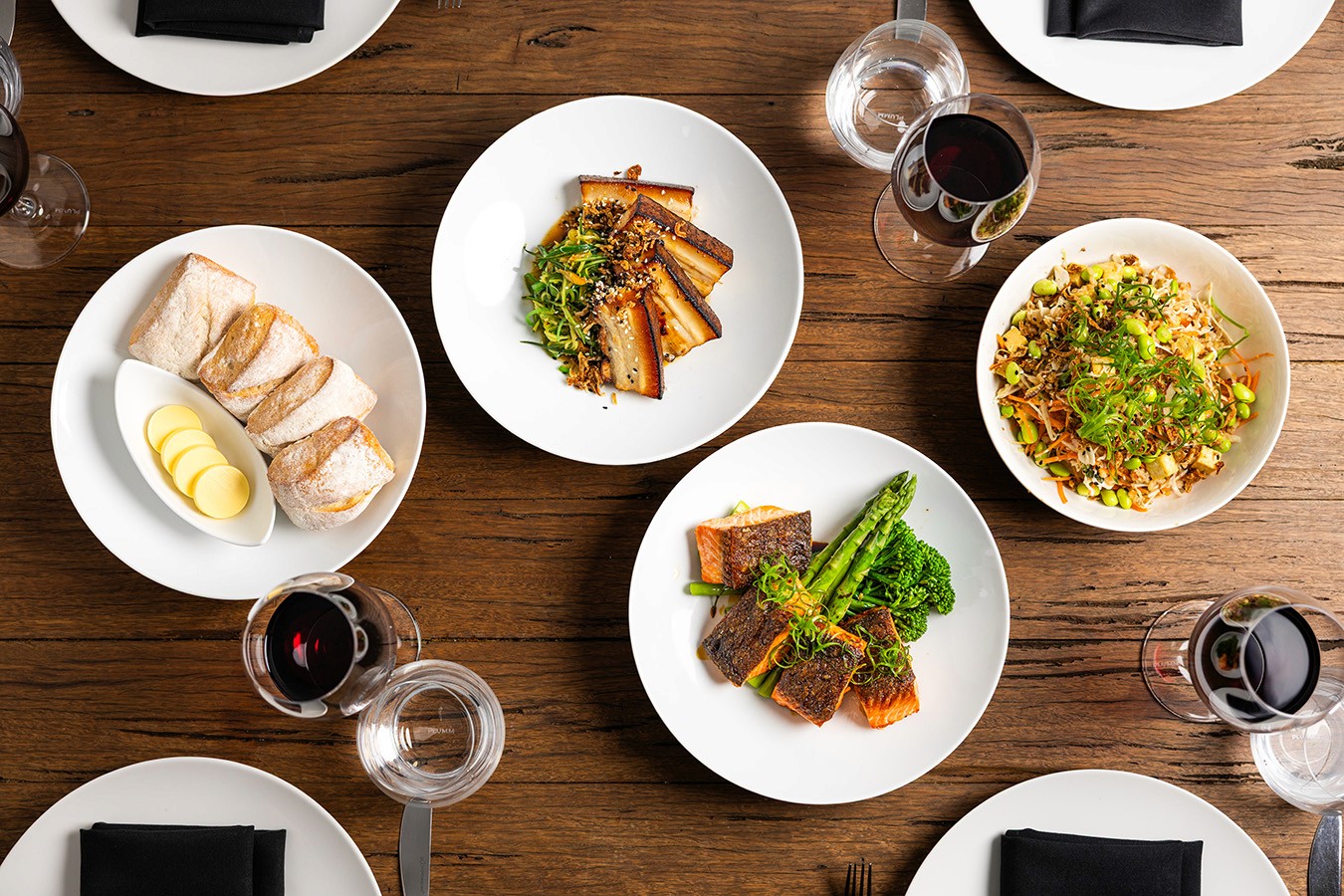
Heavy bread-and-pasta lunches are still the default order for a lot of Brisbane offices, and they're also the reason meetings go quiet by 2:30pm. If your event runs into the afternoon, building in lighter, protein-forward options — think grain bowls, salads with a real protein component, or nut-and-fruit-based snacks — keeps the room sharper for longer than another round of finger sandwiches will.
This matters most for:
Strategy sessions and off-sites
Full-day training
Back-to-back client meetings
It's a small menu decision with a noticeable effect on how the rest of the day actually goes. We touch on this in more detail in our guide to conference and multi-session catering, where keeping delegates focused across a full program is the whole point of the menu design.

Quantity guidelines shift a little depending on how the food is being served. Drop-off catering - where platters or individually packed boxes arrive ready to go with no on-site staff, tends to need a slightly tighter buffer, since there's no one adjusting service on the day if numbers move around. Full-service events, where our team is on-site managing the food throughout, give you more flexibility to hold back or release extra portions as the event runs.
If you're ordering for a smaller working lunch or a recurring weekly team catch-up, Express Catering is generally the simplest way to order. You can select exact quantities and dietary options online and have it delivered straight to your office. For larger or more complex event, an all-day conference, a client function or anything involving multiple sessions - a full-service corporate catering approach usually makes more sense, since our team can manage timing and replenishment on the day rather than leaving it to guesswork.

It's tempting to over-order "just in case," but a 25% buffer usually just means 25% more food in the bin. A 10% buffer covers unexpected extra attendees or a hungrier-than-usual crowd without blowing the budget or the waste line. If you're catering a recurring event — a weekly team lunch, say — track what actually gets eaten after a few sessions and fine-tune from there.
Dietary Requirements: Plan for Them, Don't Guess
As a general starting point, we recommend covering:
At least one vegetarian and one vegan option, clearly labelled
Gluten-free alternatives for shared items where possible
Confirming any allergies in advance for smaller, higher-stakes events (client lunches, board meetings)
For larger events, individually packaged options make dietary management far easier — no one has to ask "is this the gluten-free one?" across a shared platter. We've written more on this in Dietaries & Details: Why They Matter More Than You Think, including how far in advance we need dietary numbers confirmed and what happens if requirements come through late.

Say you're catering a half-day training session for 50 people, with a working lunch at the midpoint:
Expected attendance: ~45 people (90% of 50)
Morning tea: 2–3 items per person
Lunch: 1 main portion + 1–2 sides per person, weighted toward lighter, protein-rich options given the afternoon session
Buffer: food for 49–50 people, not 55–60
That's the difference between a well-run event and a fridge full of leftover wraps.
Beyond the Office
Everything above is built around office and corporate catering, but the same headcount logic applies to private functions too - birthdays, engagements, housewarmings and other celebrations at home or in a marquee. If that's what you're planning, our private event catering page is a better starting point, since portion sizing and service style tend to look a little different once you're outside a standard workday format.
Every office is different: team size, dietary mix, how long people actually stay in the room. If you'd rather not run the numbers yourself, send us your headcount and event details and we'll put together a tailored quantity and menu recommendation, no guesswork required.