

THIS ARTICLE COVERS:
Brisbane Corporate Catering
Brisbane Corporate Events
Corporate Catering
Drop-Off Catering Brisbane
Event Catering
Event Planning
Express Catering
Office Catering
On-Site Catering
Case Study
Conferences
Networking Events
It's easy to blame the agenda or the room temperature, but more often than not, it's the menu. A day built only on white bread, pastries and pasta salad is a day that's going to crash.
If you're planning catering for a Brisbane conference, workshop or multi-session event, here's our advice on how to structure a day that keeps 200+ delegates fed, focused and actually listening past lunch.

Most conference catering briefs still get planned as "morning tea, lunch and afternoon tea", three separate food moments, that without proper consideration, have no real connection between them. Whilst this familiar structure is still a great starting point, we find it works better to think of the whole day as one energy curve, not three separate catering moments.
Morning Tea (9:30 - 10:30am):
Delegates arrive, some already running on empty, some may have skipped or rushed breakfast and are now asked to concentrate hard within the first hour. 'Morning Tea' is the first real chance to top up blood sugar sustainably. Opting for protein or fibre here, not just pastries, means delegates head into the late-morning sessions steady rather than riding a sugar spike that's already fading by 11am.
Lunch (12:30 - 1:30pm):
Genuine hunger has built up alongside a full morning of sitting and listening, so this is the biggest energy-lever you have over the rest of the day. A heavy, carb-dominant plate feels satisfying in the moment, but it pulls blood flow toward digestion just as the agenda demands renewed focus, which is exactly why the 2pm session is where energy usually collapses.
Afternoon Tea (2:30 - 3:30pm):
That after-lunch 'collapse' is what the 'afternoon tea' session actually needs to solve. Delegates aren't newly hungry at this point, they're fatigued, so reaching for sugar-heavy snacks only compounds the problem: a 20-minute lift followed by a crash harder than if nothing had been served at all. What works instead is food that steadies rather than spikes, carrying delegates through to the end of the day with something left in the tank.
When read this way, the goal isn't to fix three separate moments, it's to plan one continuous fuel curve that matches what delegates' bodies are doing at each point in the agenda, so the room is still engaged at 4pm instead of just watching the clock.

Grain bowls and salads with a real protein component
Don't rely solely on a bread-heavy sandwich platter, considering looking at share bowls like our Cobb Salad (poached chicken, pancetta, egg, blue cheese) or Brown Rice Salad (tofu, edamame, carrot, cabbage & sesame dressing). Both carry enough protein and fibre to avoid the carb-crash lunch can produce - plus they hold up well on a buffet line throughout the entire break period.
Fruit, nuts and yoghurt-based options for afternoon tea, instead of straight sugar
The Greek Yoghurt Raspberry Pot with gluten-free granola or the Tropical Yoghurt Pot (coconut yoghurt, passionfruit) give the room something that tastes like a treat without the spike-and-crash of a lonely muffin table. A Seasonal Fruit Platter or individual Seasonal Fruit Skewers work the same way and are easy to place around the room without needing servers.
Individually Portioned Options
For lunch, something like the Fresh Balance Working Lunch Box (wrap, salad pot, fruit, sweet treat, drink) or the Sushi Bowl means delegates grab and go in seconds rather than banking up around a shared buffet between sessions. This matters most at the 200+ mark, where even a well-run buffet line can eat 15–20 minutes of break time in queuing alone.
Water and Something Beyond Coffee
Chilled, individual water bottles placed throughout the room (not just at the coffee station) get used far more than a single jug ever does - and Cold Pressed Juices or Assorted Juice Varieties give people a non-caffeinated lift for the 2:30–3:30pm stretch, when another coffee often does more harm than good to focus levels.
Despite how tempting your third cup of the day may sound in the moment, let's face it - it's rarely a good idea.
If your event runs across multiple days, this matters even more. Delegates on day two of a three-day conference are running on accumulated fatigue and the menu needs to work harder to compensate.
In this case, variety matters just as much as nutritional value. There's no point having the perfect protein-rich lunch option if delegates are looking at the same salad for the third day running and reaching for the pastries instead. Rotating through the range, say; Grilled Broccoli Salad on day one, Lemongrass Chicken & Vietnamese Noodles on day two, Greek Salad on day three, rather than repeating the same "healthy" option daily, keeps people actually eating what's designed to keep them going.
If you're planning a multi-day conference, our team can help build a rotating menu that keeps attendees fuelled today and genuinely looking forward to what's on tomorrow - get in touch and we'll put a plan together around your full agenda.


For conferences specifically, the service style is often dictated by the schedule as much as the venue. A 45-minute lunch break for 150 delegates rarely works with a single buffet line - the queue alone can eat a third of the break. In that case, individually boxed lunches, multiple serving stations or a grazing-style spread delegates can access from either side tend to move people through faster and get them back in their seats on time.
If you're working out headcount and portion sizing for the day, our headcount calculator guide is a useful starting point before you get into the finer scheduling details - the same core logic applies, just at conference scale.
Dietary Requirements at Scale
The bigger the room, the more dietary requirements you'll inevitably be managing and the less feasible it becomes to handle them individually on the day. For events over 50 people, we strongly recommend:
Collecting dietary requirements weeks before on registration, not on arrival
Labelling every station clearly rather than relying on staff to answer the same question repeatedly through the break
Pre-plating or individually packaging dietary-specific meals so there's no confusion at a shared table
We go into more detail on managing this properly in Dietaries & Details: Why They Matter More Than You Think - it's worth a read regardless of event size, but especially once you're past the 50-guest mark.
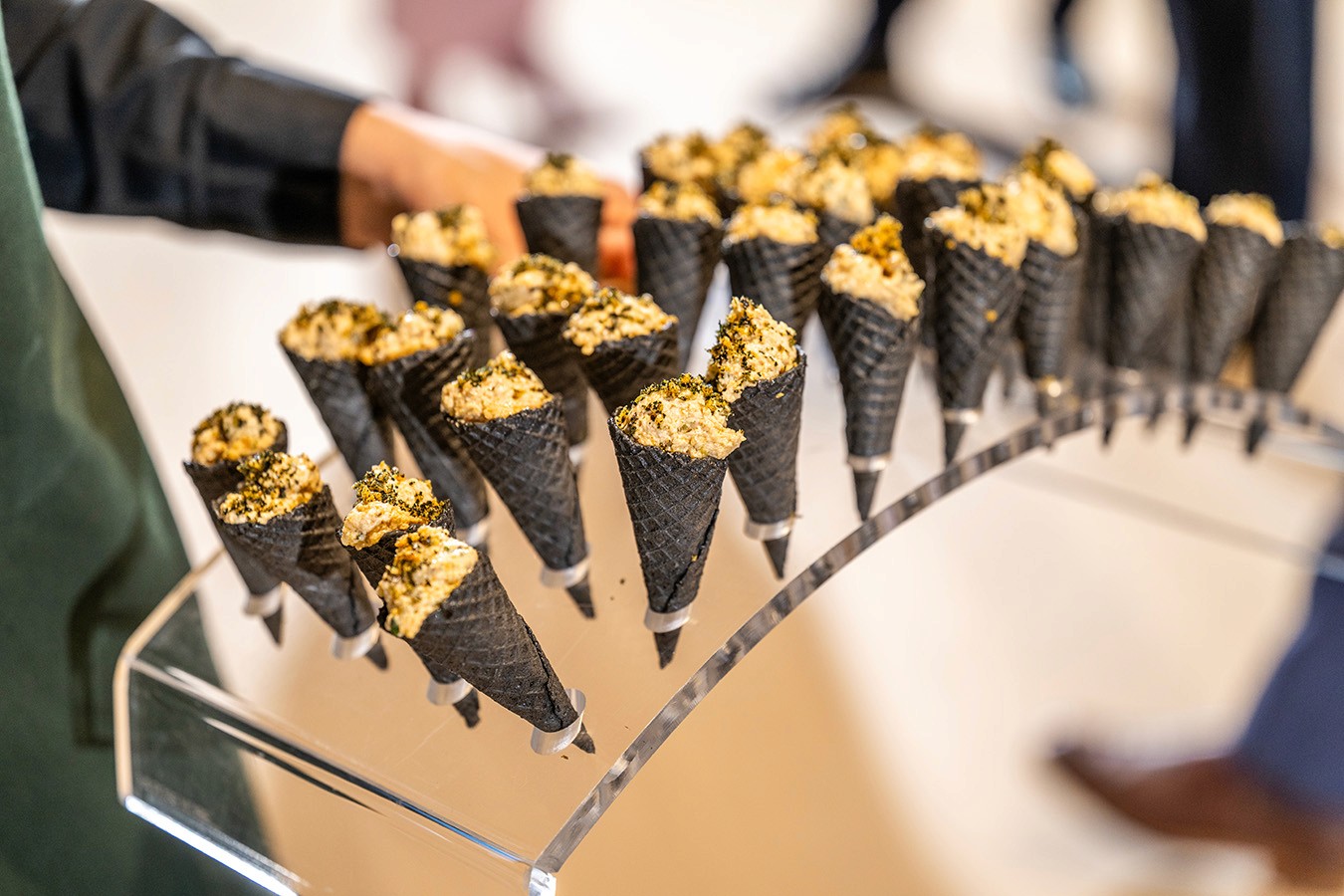
The single biggest failure point in conference catering isn't the food - it's timing.
Catering that arrives too soon, well before the break starts, can go past it's prime before anyone even sees it. Catering that arrives after the break starts creates a queue that eats into session time. If your agenda has any flexibility built in (For example, a 10-minute buffer between sessions), it's worth flagging that to your caterer in advance so service can be timed to when the room will actually be free, not just when the run sheet says the break begins.
For full-day and multi-day events, our conference catering service includes agenda coordination as standard, so food service is built around your actual session timing rather than a fixed schedule that doesn't move with the room.
Whether it's a half-day workshop for 40 or a three-day conference for 300, get in touch and we'll help put together a menu and service plan built around your actual agenda - not another generic conference package.


